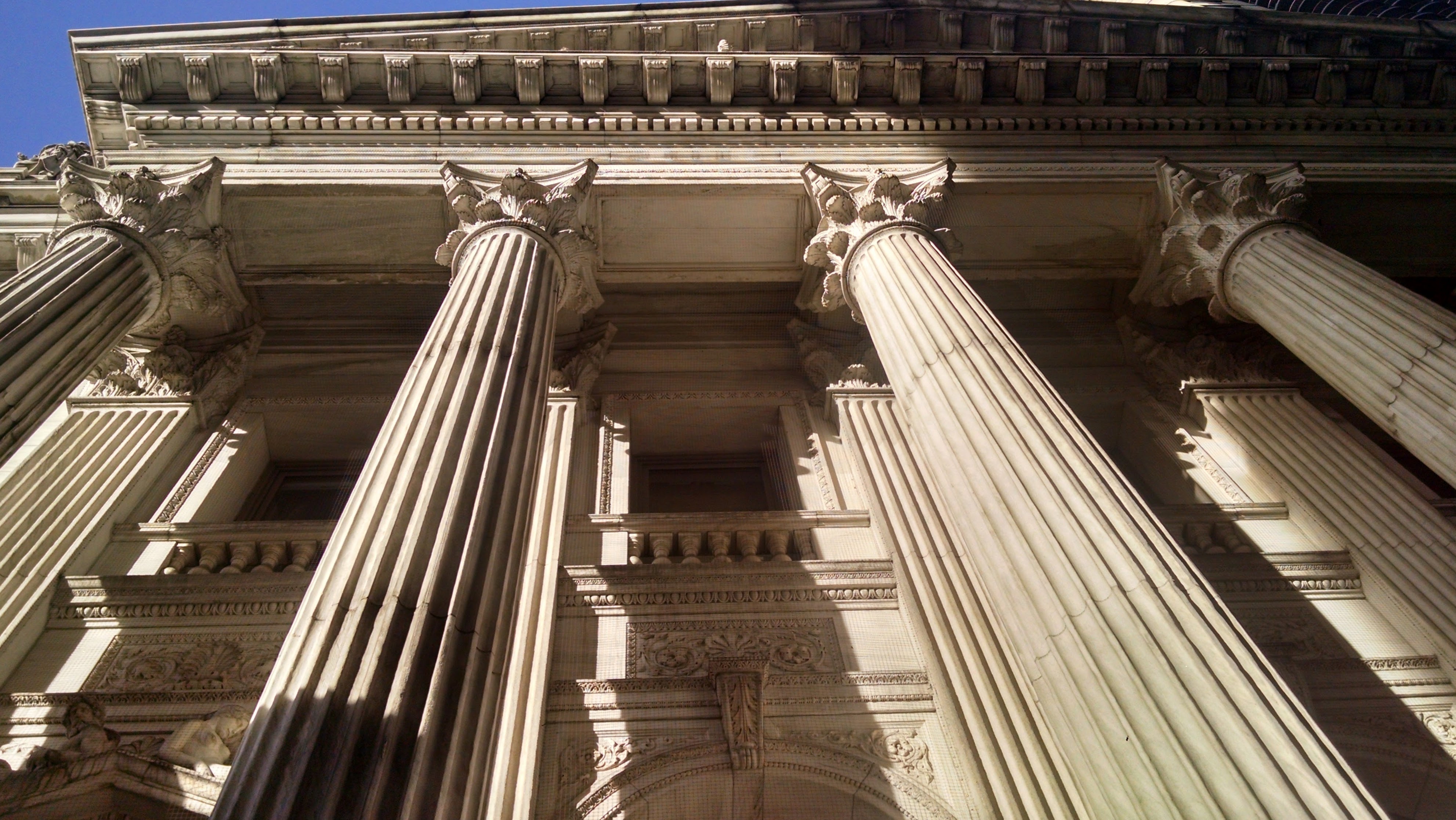
Beaux-Arts architecture takes its name from the legendary art school — the École des Beaux-Arts in Paris. Beaux-Arts, the academic architectural style taught there, was based on the aesthetic principles of neoclassicism. The style combines Roman and Greek classical architectural principles with Renaissance and Baroque stylings. Beaux-Arts buildings are majestic, ornate, and theatrical. With its grandiosity, Beaux-Arts became a favorite architectural style for government and institutional buildings such as art museums, train stations, libraries, etc. It gained special popularity in America as a result of the City Beautiful movement, which championed the idea that civic architecture had to be beautiful.
The Beaux-Arts Movement emerged in the late 1800s in Paris and spread to the U.S. during the Gilded Age. Reflecting the wealth accumulated during the Industrial Revolution, it stayed in vogue from about 1880 to the 1920s.
The first American architect to study in the École des Beaux-Arts was Richard Morris Hunt who designed the pedestal for the Statue of Liberty, the main facade of the Metropolitan Museum of Art, and Alva Vanderbilt’s Petit Chateau to name a few.
Beaux-Arts Characteristics:
- Classical Roman and Greek elements such as columns, cornices, and triangular pediments
- Colonnades, pavilions
- Arched windows and doors
- Focus on symmetry
- An eclectic mix of elaborate decorative Italian and French Renaissance elements
- Stone or stone-like materials
- Elevated first story
- Highly decorative façades with statues, figures, and other sculptural decoration
- Grand interior arrival halls and staircases
- Formal gardens and landscaped grounds
Examples:


- Chamber of Commerce of the State of New York, 1901, James B. Baker
- Lyceum Theater, 1903, Herts & Tallant
- Lunt-Fontaine Theater, 1910, Carrere & Hastings
- Farley Post Office building, 1912, William Mitchell Kendall of McKim, Mead and White
- Surrogate’s Court/ Hall of Records, 1907, John R. Thomas and Horgan & Slattery
Leave a Reply