Greenwich Village holds a very special place in New York’s history, largely because of its many creative inhabitants. From the 19th century, it nurtured and inspired some of the world’s best thinkers and writers. Low rents attracted some of them, while others enjoyed the splendor of the Gilded Age, creating a uniquely rich literary tapestry.


Table of Contents
Thomas Paine (1737 – 1809)
Thomas Paine, an English-born American Founding Father, French revolutionary, and political philosopher, was one of the most influential voices of the American Revolution. He authored Common Sense and The American Crisis, two pamphlets that articulated the case for American independence. Following his role in the American Revolution, Paine went to France to be involved in the French Revolution. There, he wrote The Age of Reason – a critique of organized religion that stirred significant controversy.
Paine returned to the United States in 1802 and spent his final years in Greenwich Village. His criticism of religion was way ahead of his time and could not be accepted by his contemporaries. Thus, he found his earlier popularity greatly diminished.
Penniless and ailing, Paine settled in a boarding house on Herring Street (now 309 Bleecker Street), a structure demolished in 1930. As his health worsened, he moved to a small house on Columbia Street (now 59 Grove Street), where he died on June 8, 1809.
Today, the site of his final residence is occupied by Marie’s Crisis Cafe. Established in the early 20th century, this cafe takes its name from both Paine’s pamphlet The American Crisis and the name of its founder, Marie Du Mont, known for her blonde hair and clandestine sale of alcohol during Prohibition. It still stands as an unconventional homage to the “Father of the American Revolution” – an iconoclast who challenged societal norms.
Washington Irving (1783 – 1859)
Washington Irving, often called the “first American man of letters,” was the first American writer to gain international fame. Best known for his iconic tales “Rip Van Winkle” and “The Legend of Sleepy Hollow”, he also distinguished himself as a historian and diplomat.
Greenwich Village has a curious connection to Irving. The plaque on 11 Commerce Street in the West Village claims it as the former home of the famous author. However, this claim does not stand factual scrutiny. The plaque refers to “Washington Irving Jr.,” a puzzling detail since Irving never had children, and his father was named William Irving Sr., not Washington Irving Sr.
It is possible that the house later belonged to one of Irving’s sisters or that someone unrelated, named Washington Irving Jr., once lived there. What is certain, though, is that the author of The Legend of Sleepy Hollow never lived in the Village.
Edgar Allen Poe (1809 – 1849)
The patron saint of American Bohemia, Edgar Allan Poe, looms large in the story of Greenwich Village.
Best known for his macabre poems and mystery tales, Poe was born in Boston and died in Baltimore, but it was in New York that he became a writer, crafting many of his most celebrated works, and, for a time, Greenwich Village was his home.
When Poe first arrived in New York in 1837, he, his young wife Virginia, and her mother settled at 137 Waverly Place, at the corner of Sixth Avenue and Waverly Place. They soon relocated to 113 ½ Carmine Street. During their time in the Village, it’s said that Poe and Virginia often strolled through St. John’s Cemetery, which once stood where James J. Walker Park is now located.
Financial hardships forced Poe to leave New York in 1838, moving his family to Philadelphia. However, when he returned to the city in 1844, he resided at several locations, including a boarding house at 130 Greenwich Street and a row house at 85 West Third Street (then Amity Street). Though the original structure no longer exists, a replica of the façade is integrated into the architecture of NYU’s law school, just half a block away.
Mark Twain (1835 – 1910)
Mark Twain, already a celebrated writer, lived in Greenwich Village for a few years.
For about a year, he resided in the infamous “House of Death” at 14 West 10th Street. Among many ghosts still haunting this house, the white-haired apparition of Twain himself is said to be the friendliest.
In 1904, Twain moved to 21 Fifth Avenue at the corner of East 9th Street. The stunning single-family townhouse was originally designed by the renowned architect James Renwick Jr. for his parents. Twain lived there for approximately four years, until 1908, before leaving New York for Connecticut, where he spent his final years.
Sadly, 21 Fifth Avenue, Twain’s most significant residence in New York and one of the most architecturally remarkable houses in Greenwich Village, was demolished just a couple of years before the establishment of the Landmarks Preservation Commission.
Emma Lazarus (1849 – 1887)
Emma Lazarus was an American poet, writer, and activist best remembered for her iconic sonnet, “The New Colossus,” now immortalized on a plaque at the base of the Statue of Liberty. A lifelong New Yorker, Lazarus was born into a prominent Sephardic Jewish family of Portuguese descent. She began writing poetry as a teenager, quickly gaining the attention of such luminaries as Ralph Waldo Emerson, who admired her talent and became her mentor.
Beyond her literary achievements, Lazarus was a vocal advocate for Jewish refugees fleeing antisemitic pogroms in Eastern Europe.
In 1883, she donated her sonnet “The New Colossus” to an auction, raising funds for the pedestal of the Statue of Liberty. In 1903, the sonnet’s famous lines, “Give me your tired, your poor, your huddled masses yearning to breathe free,” were engraved on the Liberty’s pedestal.
Emma Lazarus only lived to be 38 years old and spent her final years at her family home at 18 West 10th Street in Greenwich Village.
Henry James (1843 – 1916)
Henry James, one of the most celebrated novelists in the English language, was born at 21 Washington Place in Greenwich Village. He belonged to one of the most intellectually remarkable American families. His father, Henry James Sr., was a noted religious philosopher, and his siblings, particularly William James, a pioneering psychologist, and Alice James, a highly educated and well-read woman, were equally remarkable.
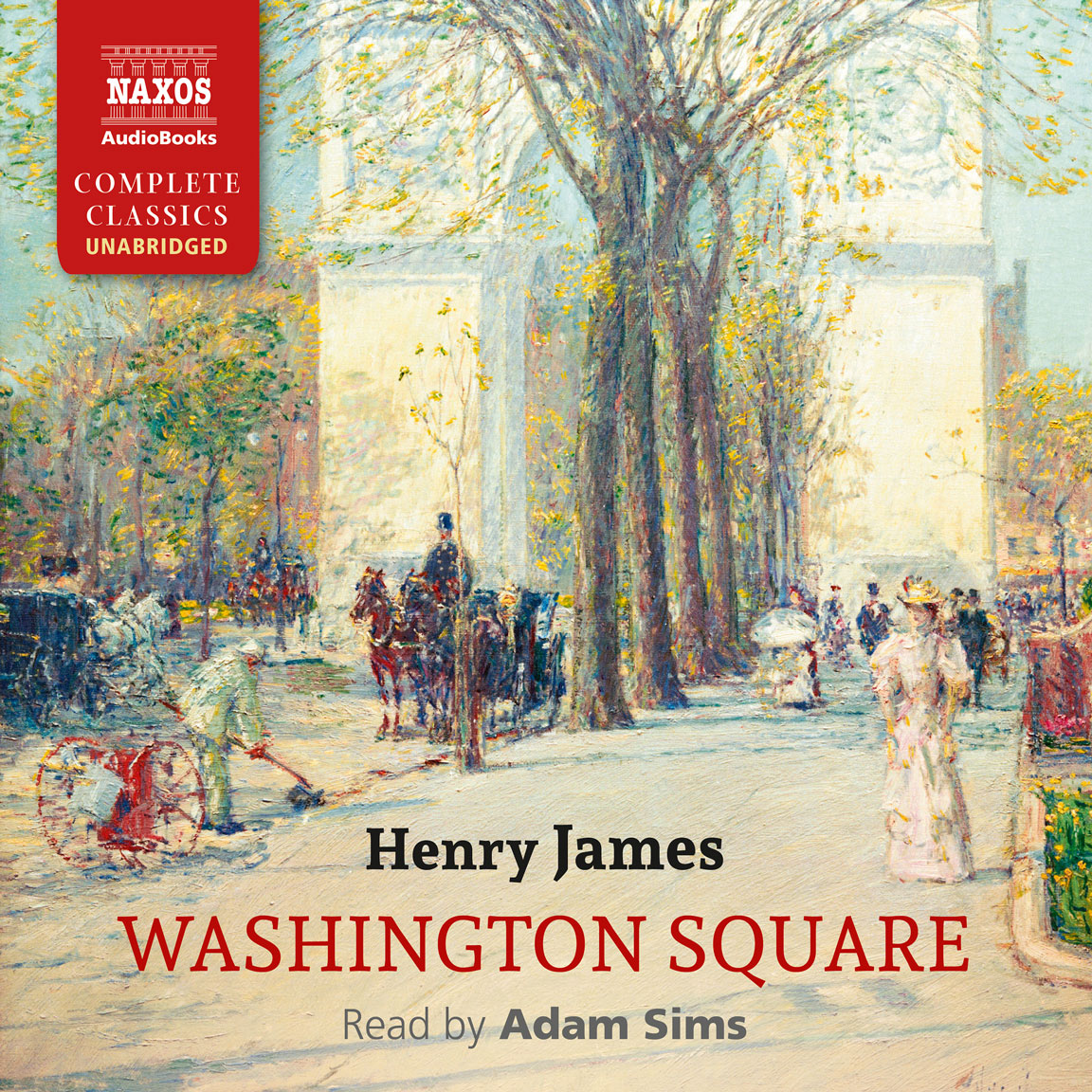
Although he traveled extensively and eventually settled in London, many of his works were connected to his New York experiences. The house at 18 Washington Square North, where his grandmother lived and where he spent time as a child, became an iconic location in his literary world. He immortalized the area in his novel Washington Square (1880), placing the heroine—often associated with the film adaptation, The Heiress—in this very house.
His masterworks include The American, Washington Square, The Wings of the Dove, The Ambassadors and The Golden Bowl .
Oscar Wilde (1854 – 1900)
Oscar Wilde was a 19th-century phenomenon. Born in Dublin, he studied and lived in Victorian England, where he caused a stir by the sheer force of his eccentric personality. With disregard for Victorian rules of behavior, Wilde was the object of notorious civil and criminal suits, public scandals, and even imprisonment. A flamboyant homosexual, he appeared in public wearing silk stockings and sported long, flowing hair.
Wilde’s literary legacy includes The Picture of Dorian Gray, his only novel and a timeless masterpiece. A poet and a prolific playwright, he was a prominent figure of the late 19th-century Aesthetic movement that advocated art for art’s sake.
In 1882, before he became a famous author, Wilde came to the United States for a lecture tour to promote Gilbert & Sullivan’s operetta. It is no wonder Wilde stayed in Greenwich Village during his time in New York City. The house at 48 West 11th Street still stands.
Edith Wharton (1862 – 1937)
Edith Wharton, née Jones of Old New York, was not only a prolific writer but also the first woman in the world to receive the Pulitzer Prize for Fiction.
Born and raised in Manhattan, Edith Jones was baptized at Grace Church, the most prestigious church in town located on Broadway and East 10th Street. Her parents were prominent members of New York’s Gilded Age high society and the phrase “Keeping up with the Joneses” refers to her family. After her father’s death, Edith and her mother settled at 7 Washington Square North. Known as “The Row,” this stretch along the north border of Washington Square Park in Greenwich Village was the city’s finest residential street.
Following her divorce, Wharton moved to France in 1913, where she lived until her death. While abroad, she wrote prolifically, producing some of her most significant works, including The Age of Innocence. Her novels were deeply rooted in the Gilded Age New York she remembered, with her time in Greenwich Village serving as a foundation for her depictions of Old New York.
O. Henry (1862 – 1910)
“Greenwich Village… the village of low rents and high arts.”
― O. Henry, The Last Leaf
O. Henry, a celebrated American short story writer known for his witty narrative style and signature surprise endings, never lived in Greenwich Village but used it as the setting for one of his most touching stories, The Last Leaf.
Grove Court serves as the backdrop for this moving story, which follows a gravely ill woman convinced she will die when the last leaf on a vine outside her window falls. In a moment of selfless creativity, a struggling, unrecognized artist paints a leaf on the wall where the vine grows, ensuring she never sees the vine bare. Thus, the artist creates the masterpiece that had long eluded him – a work of art that saves a human life.
It is no wonder that the story is set in the West Village in the early 1900s, when artists, writers, and musicians, drawn by the area’s low rents, transformed it into a unique bohemian enclave.
Leave a Reply