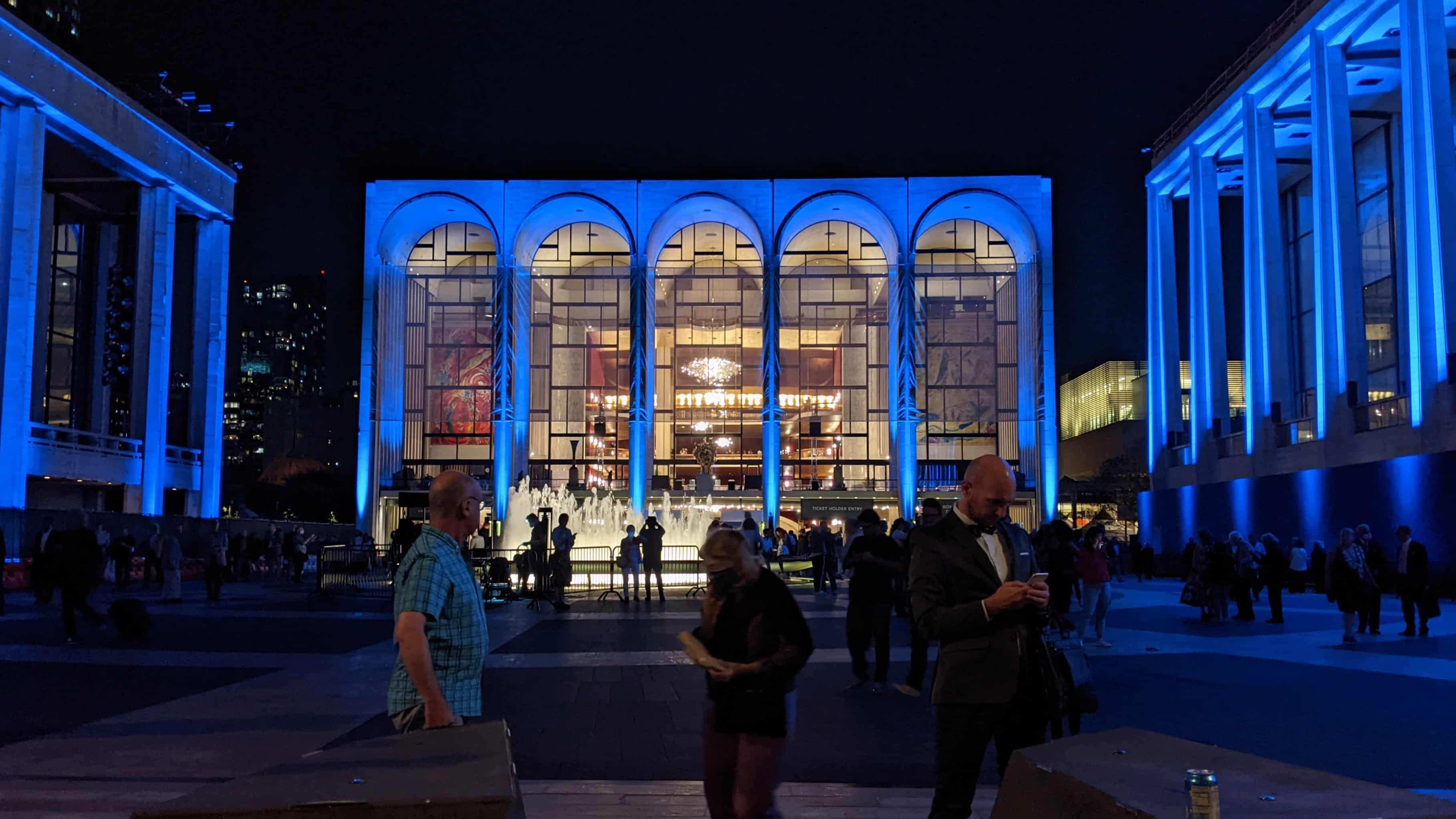
Constructed between 1959 and 1969, Lincoln Center is widely considered the world’s first modern performing arts campus—purpose-built as a unified home for multiple major cultural organizations. It spans more than 30 indoor and outdoor facilities and houses the New York Philharmonic, the Metropolitan Opera, the New York City Ballet, the Chamber Music Society of Lincoln Center, and the Juilliard School.


Lincoln Center History and Conception
Lincoln Center was conceived in the 1950s, when two of America’s oldest performing arts organizations—the Metropolitan Opera and the New York Philharmonic—were both seeking new homes. Construction began in 1959, producing a modernist ensemble of performance halls, plazas, and public spaces. John D. Rockefeller III is credited with raising more than half of the $184.5 million in private funds required for the project, drawing heavily from his own resources.
The Upper West Side at midcentury was a neighborhood in decline, marked by aging housing stock and pockets of entrenched poverty. Civic leaders, planners, and architects—led by Rockefeller—envisioned Lincoln Center as part of the Urban Renewal Project, offering a cultural center to replace slums. When nearly 200 buildings were demolished for the project, thousands of residents were displaced, sparking controversy and criticism.
Metropolitan Opera House (1966)
Designed by Wallace Harrison, it is the campus’s most recognizable and most photographed structure on the plaza.
David Geffen Hall
(Originally Philharmonic Hall; later Avery Fisher Hall)
Home of New York Philharmonic, designed by Harrison & Abramovitz.
David H. Koch Theater (1964)
Designed by Philip Johnson for the New York City Ballet.
Alice Tully Hall and The Juilliard School (1969)
Originally designed by Pietro Belluschi with Eduardo Catalano, in the Brutalist style, it was dramatically reimagined in 2009 by Diller Scofidio + Renfro.
Vivian Beaumont Theater (1965)
A rare New York building by modernist architect Eero Saarinen, it is the only Broadway theater outside the Theater District.
Architectural and Cultural Significance of Lincoln Center

Lincoln Center was also an architectural concept. The structures are geometric, emphasizing symmetry and simplicity, hallmarks of the period’s architectural ideals. They project a sense of clarity, order, and monumentality. Designed by prominent mid-century architects—including Wallace Harrison, Philip Johnson, and Eero Saarinen—the campus blends clean modernist lines with civic grandeur.


At the heart of the complex is Josie Robertson Plaza, anchored by the Revson Fountain, whose choreography of light and water has become a city landmark in its own right. Designed by Philip Johnson and John Dinkeloo, the fountain is a peaceful centerpiece intended to soften the severity of the otherwise geometric design. The fountain is featured in many films, including The Turning Point, Moonstruck, Center Stage, and Ghostbusters.
Criticisms and Controversies
Like most innovative projects, Lincoln Center’s creation came with much criticism and significant controversy. To many, its scale and appearance felt unwelcoming and “fortress-like.” Moreover, the conglomerate of high-culture institutions felt elitist, catering primarily to the wealthy. But the largest controversy was the demolition of nearly 200 buildings, uprooting thousands of residents, many from longstanding, working-class, and predominantly minority communities. This became one of the most visible examples of the social cost of urban renewal, prompting debates about equity, planning, and the responsibilities of cultural institutions.
Cultural Impact
Over the past six decades, Lincoln Center has evolved from a monumental “acropolis of culture” into an open, inviting place, where world-class performances coexist with outdoor film screenings, public festivals, and everyday New Yorkers gathering around the fountain. It’s hard to imagine New York without Lincoln Center. From going to the opera in the winter to dancing on the plaza on a warm summer night, it became inseparable from the city’s cultural life.


Leave a Reply