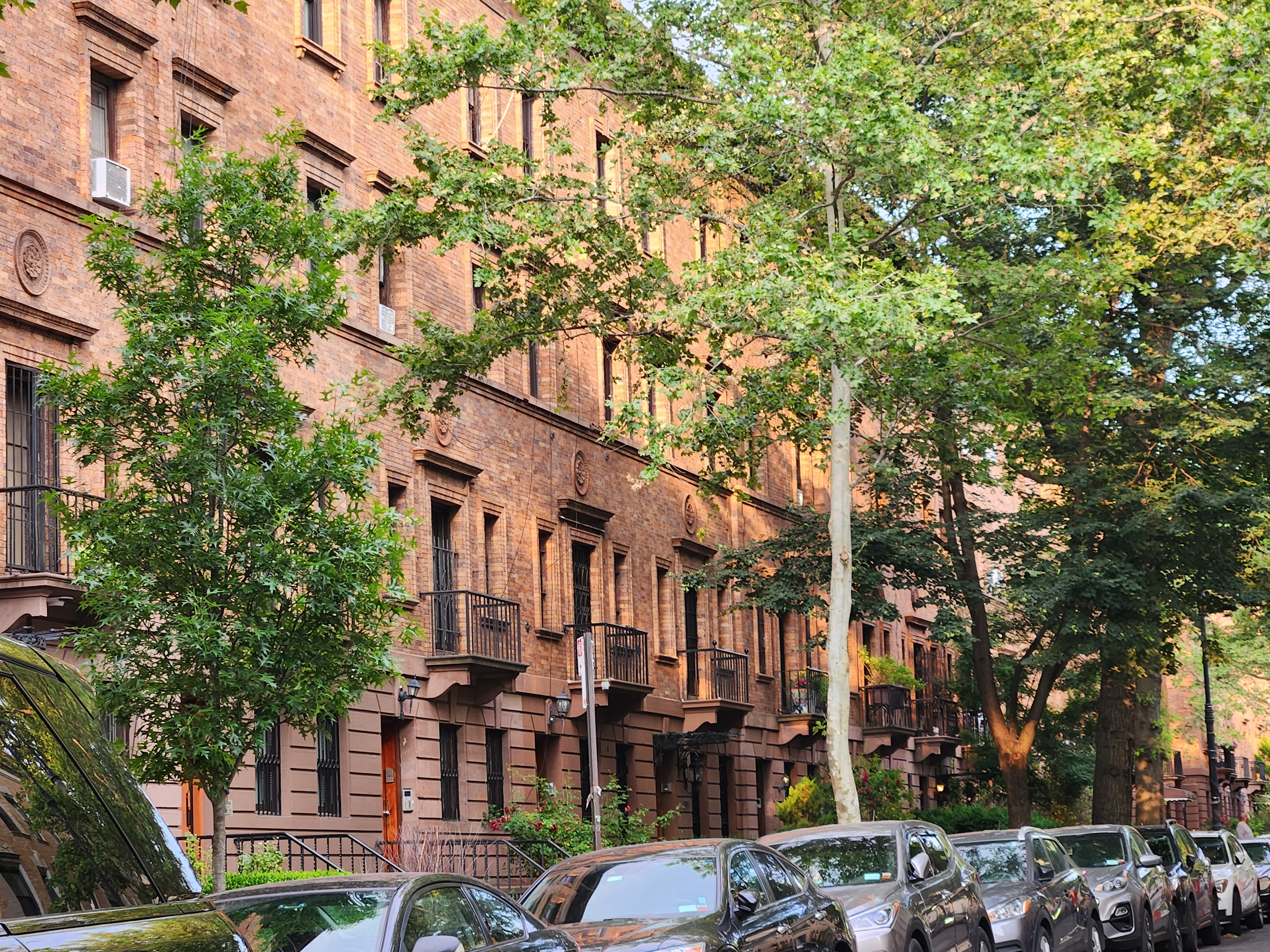
Striver’s Row, Harlem
An amazing example of late 19th-century urban design, two blocks of beautiful rowhouses from 138th Street to 139th Street, from Frederick Douglass Boulevard to Adam Clayton Powell Boulevard, were developed in the 1890s by David H. King. The moneyed and brazen developer had lofty ideas for his new speculative development and hired the best architects of the day to work on the project. The homes boasted the latest amenities plus offered rear courtyards and alleyways between them – a true rarity in Manhattan. They were meant for affluent white New Yorkers, but it was not to be. The speculative development failed due to the financial Panic of 1893, which triggered a nearly decade-long recession, during which the white New Yorkers abandoned Harlem.


By the early 1900s, the neighborhood had become predominantly black, but the houses stood empty since the owners refused to sell to black buyers. Only by the 1920s, during the Harlem Renaissance, were they made available to middle-class black residents. Beautiful homes attracted leaders of the black community and upwardly-mobile professionals, or “strivers,” who gave the development its moniker “Striver’s Row.”
The housing development became home to doctors, lawyers, artists, and black intellectuals, including Congressman Adam Clayton Powell Jr., and a dizzying number of world-famous Jazz musicians such as ragtime and jazz pianist and composer Eubie Blake, W.C. Handy who referred to himself as the Father of the Blues, and Fletcher Henderson – a leader of Fletcher Henderson’s Orchestra, the top African American dance band in New York City at the early 20s, who brought young Louis Armstrong to New York.


The houses on the South side of 138th Street were designed by James Brown Lord in the Georgian Revival style.

The houses on the North side of 138th and on the South side of 139th Street were designed by Bruce Price and Clarence S. Luce

The houses on the North side of 139th Street were designed by Stanford White of the firm McKim, Mead & White in the Italian Renaissance Revival style


Leave a Reply