The life story of Alexander Hamilton—founding father, architect of America’s financial system, and the first Secretary of the Treasury—is deeply tied to New York City, where he rose to power, served the fledgling nation, and met his tragic end.
Humble Beginnings in the Caribbean
Hamilton was born in 1755 (or 1757) on the island of Nevis in the British West Indies. His exact birth year is debated—Hamilton claimed 1757, but records suggest 1755.
His mother was of French Huguenot descent. She had fled an abusive marriage and bore Hamilton out of wedlock with James Hamilton, a Scottish trader. When Hamilton was around 11, his father left, and not long after, his mother died of fever. Orphaned, Alexander was taken in by a merchant family on the island of St. Croix.
However, Hamilton’s intelligence and ambition were evident. Recognizing his talent, local benefactors raised funds to send him to New York for an education.
Alexander Hamilton and the American Revolution
In 1773, Hamilton arrived in New York and enrolled at King’s College (now Columbia University). However, his education was interrupted by the American Revolution. As revolutionary fervor gripped the colonies, Hamilton threw himself into the cause—publishing pamphlets, joining a militia, and eventually commanding an artillery unit.
His writings and military leadership caught the eye of General George Washington, who appointed him aide-de-camp. Hamilton became one of Washington’s most trusted advisors during the Revolutionary War. He showed military talent and bravery on the battlefield when he led the troops in the Battle of Yorktown in 1781.


© Museum of the City of New York, USA
American, out of copyright
Marriage and Political Career
Hamilton’s private life also took a spectacular turn when he married Elizabeth Schuyler, whose father was one of the wealthiest men in New York, connecting him to one of the most influential families in the state. After the war, he studied law, passed the bar, and began practicing in New York City.
And this is when Hamilton’s brilliant political career began.
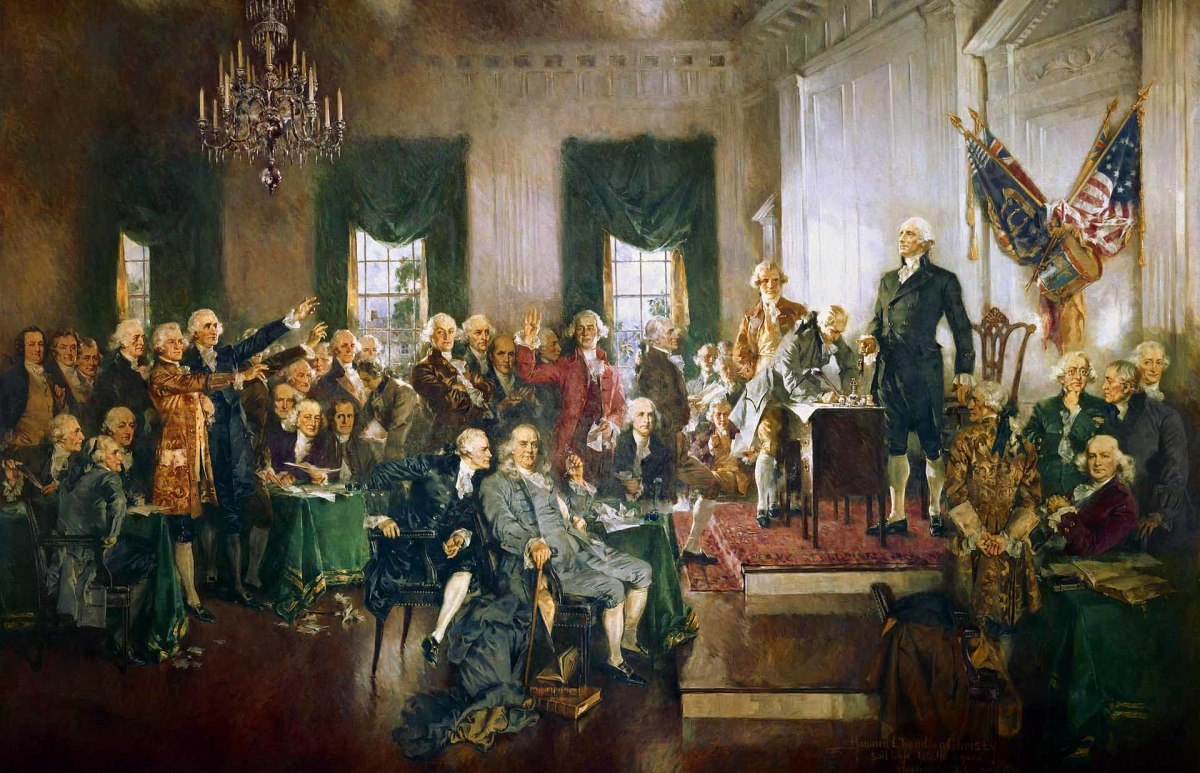
He served in the Confederation Congress, became a delegate to the Constitutional Convention in 1787, and co-authored the Federalist Papers—a series of essays defending the U.S. Constitution that remain foundational to American political thought.
In 1789, when Washington was elected the first president, he appointed Hamilton the nation’s first Secretary of the Treasury. In this role, Hamilton laid the groundwork for the American financial system. He advocated for the federal assumption of state debts, created the First National Bank, and designed the national currency. He insisted on a strong central government and an industrial country.
Political Conflict and a Sex Scandal
Hamilton’s economic policies drew fierce opposition from Thomas Jefferson and James Madison, who envisioned a decentralized republic rooted in agrarian values. They feared that Hamilton’s plans for a strong central government leaned toward monarchy. Hamilton had strong support in the North—especially in New York. In exchange for Southern support of his financial program, including the federal assumption of state debts, a political compromise was struck: the national capital would be relocated to a newly created city on the Potomac River—Washington, D.C.
Hamilton’s personal life also made headlines. In 1797, he published a pamphlet confessing to an affair with a married woman to clear himself of accusations of public corruption. It was the first major sex scandal in U.S. history, and it damaged his political future.
Duel and Death


Hamilton’s combative personality made him many enemies, none more fateful than Aaron Burr. Their rivalry, sharpened by Hamilton’s opposition to Burr’s political ambitions, came to a head in 1804. After Hamilton insulted Burr at a dinner party, Burr asked for an apology. Hamilton refused, and Burr challenged him to a duel.
On July 11, 1804, the two met in Weehawken, New Jersey. Hamilton was mortally wounded and died the next day in New York.
He was buried at Trinity Churchyard in Lower Manhattan, where his grave still stands today, not far from Wall Street—an area shaped by the very financial system he designed.
Legacy
Having built the financial foundation for the country, Hamilton failed to provide for his family. He died deep in debt, leaving behind eight children and a devoted wife. Eliza Hamilton, who had endured scandal and sacrifice, outlived him by 50 years. She never remarried and spent decades defending and preserving his legacy.

Leave a Reply