Riverside Church
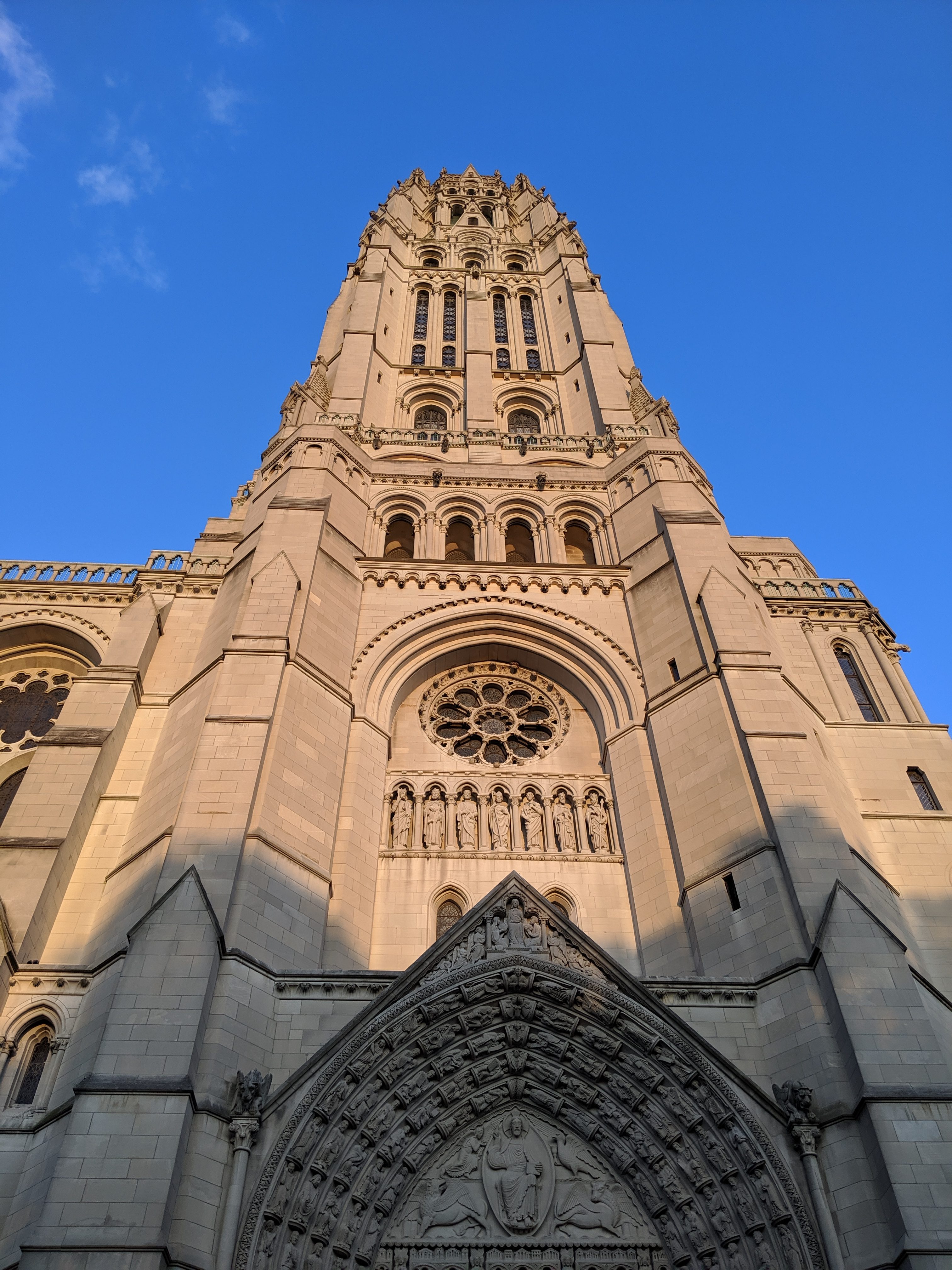
New York is filled with great churches, but few are as ambitious—or as surprising—as Riverside Church. Standing high above the Hudson River in Morningside Heights, with its soaring Gothic tower dominating the skyline, Riverside Church looks like a medieval European cathedral.
Yet Riverside Church is not medieval.
Completed in 1930, it is a distinctly American creation—a church for the modern age that blends Gothic architecture, progressive religious ideals, philanthropy, education, and social activism into a single remarkable building.
A Vision for a New Kind of Church
The church was the vision of industrialist and philanthropist John D. Rockefeller Jr. and influential minister Harry Emerson Fosdick. Together, they planned a church that would be interdenominational, open to all Christians regardless of denomination, and deeply involved in civic life.
To create this vision, Rockefeller purchased a large site in Morningside Heights near Columbia University and commissioned architects Henry C. Pelton and Charles Collens to design it. The architects traveled through France and Spain studying medieval churches before selecting their primary inspiration: the great thirteenth-century Cathedral of Chartres.


Unlike medieval cathedrals, however, Riverside was built using a modern steel frame concealed beneath its Gothic stone exterior, allowing the architects to recreate the soaring forms of medieval Gothic architecture using twentieth-century engineering techniques. The church’s most recognizable feature is its massive 392-foot tower, equivalent to a 22-story building, which makes it one of the tallest church towers in the United States. The tower also serves as an observation point, offering sweeping views over Manhattan and the Hudson River.
A Tower of Bells: The Carillon


The tower contains one of the world’s great carillons—a collection of bells played from a keyboard much like a piano. Rockefeller donated the 74-bell carillon in memory of his mother, Laura Spelman Rockefeller. The largest bell, known as the Bourdon, weighs nearly 20 tons, while the smallest weighs just ten pounds. When the bells ring across Morningside Heights, they create one of New York’s most distinctive and beautiful sounds.
The carillon is played from a unique wooden keyboard called a baton clavier. Instead of pressing keys with their fingertips, the carillonneur strikes large wooden batons with closed fists while using foot pedals to control the largest bells. Each movement is transmitted through a network of steel wires directly to a bell’s clapper, allowing the performer to play the tower like a giant musical instrument with remarkable precision and expression.
Where Saints Meet Scientists
The most fascinating feature of Riverside Church is hidden in plain sight.
Like in medieval churches, the main west entrance is adorned with rows of carved stone figures surrounding the portal. Traditionally, they represent the saints and biblical characters.

But if you look more closely, among the figures you’ll notice scientists, philosophers, educators, reformers, artists, and humanitarians. Harry Emerson Fosdick believed that human achievement in science, medicine, philosophy, education, and social reform could be viewed as part of humanity’s spiritual journey. As a result, Riverside’s sculptural program celebrates not only faith but also intellectual and cultural achievement.
Among the identifiable historical figures are Albert Einstein, Charles Darwin, Hippocrates, Pythagoras, Immanuel Kant, and Ralph Waldo Emerson. Inside the church, you’ll find carved figures of people who made major contributions to humanity, including Johann Sebastian Bach, Abraham Lincoln, Michelangelo, Florence Nightingale, and Booker T. Washington.

Lincoln is easily identifiable on the left. On the right is Booker T. Washington, recognizable by his clean-shaven face, suit-like clothing, and formal pose. The female figure to his left is Florence Nightingale (The Lady with the Lamp), identifiable by the lamp she holds.
Isn’t it remarkable that a church places scientists, musicians, artists, and philosophers alongside saints with such confidence and intentionality?
Faith in Action: The Social Gospel
Riverside Church was never intended to function solely as a place of worship. From the beginning, it was designed as a community center containing classrooms, meeting rooms, a library, daycare facilities, a gymnasium, and an auditorium. This reflected the ideals of the Social Gospel movement, which emphasized that churches should address social problems as well as spiritual needs. In many ways, Riverside serves as a university, civic center, and a place of worship combined into one institution.
Gothic Grandeur for the Modern Age


Stepping inside Riverside Church is a dramatic experience. The vast nave rises overhead beneath ribbed vaults supported by slender stone columns. Pointed arches lead the eye toward the chancel, while stained-glass windows fill the space with rich blues, reds, and golds. Although built centuries after the Gothic era ended, the architects successfully captured the emotional power of medieval architecture.
The interior accommodates more than 2,000 worshippers and contains one of New York City’s finest pipe organs, regularly used for concerts and recitals. Unlike many modern religious buildings, Riverside embraces grandeur unapologetically. Every detail—from the stone carvings to the stained glass—was designed to inspire awe.


Leave a Reply