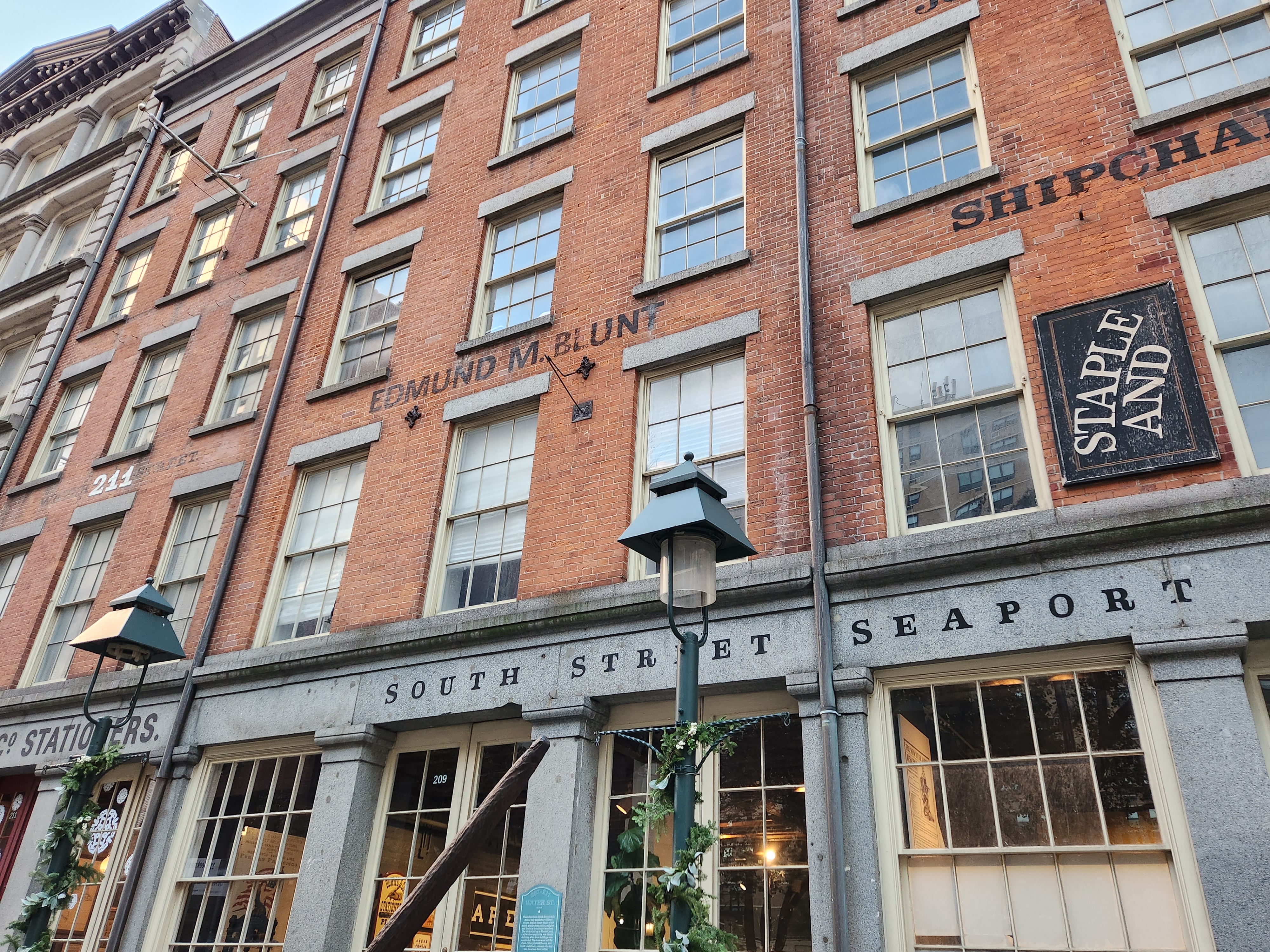
South Street Seaport – oysters, ships, and commerce

New York Harbor, one of the world’s largest natural harbors, is responsible for much of New York’s economic might. The commercial reputation of the Financial District started in the 17th century with the South Street Seaport, where New York Harbor meets the East River. Before the era of trading stocks, merchants traded sugar, coffee, rum, and cotton from the West Indies and clothing, tea, furniture, and porcelain from Europe and the Far East in the bustling seaport. In other words, before Wall Street, there was Pearl Street, which used to be the shoreline where the Dutch built the first piers in the area.
There are a few theories as to how Pearl Street got its name. The Dutch called it Parelstraat – Pearl Street in English. The harbor had an abundance of oysters enjoyed by the native Lenape people. The large piles of discarded oyster shells could explain the origin of the name. Another theory is that the Dutch crushed oyster shells and used them as street paving.
The 17th-century Pearl Street quickly became crowded with docks, ships, and piers. Later on, the shallow intertidal zone of East River was filled in, creating Water, Front, and South Streets. The new coastline was deeper and easier to navigate, making the port even more attractive to ships. By the early 19th century, the Port of New York was the busiest commercial port in the country and one of the largest in the world.


With most buildings dating back to the 18th century, the South Street Seaport is a beautifully preserved piece of history. Even though the historic port has long been gone and gave way to modern-day tourist attractions, there are still some reminders of its busy commercial past. Bowne & Co. is New York’s oldest operating business under the same name! The company, established in 1775 by Robert Bowne, was one of many printing offices serving flourishing maritime industries that needed invoices, advertisements, and other printed materials. Bowne & Co., together with the Seaport Museum, created a 19th-century-style print shop with a collection of several historic letterpresses still in use! One can drop by the shop at 211 Water Street, buy postcards, and have a brush with the past, watching the letterpresses at work.

Leave a Reply