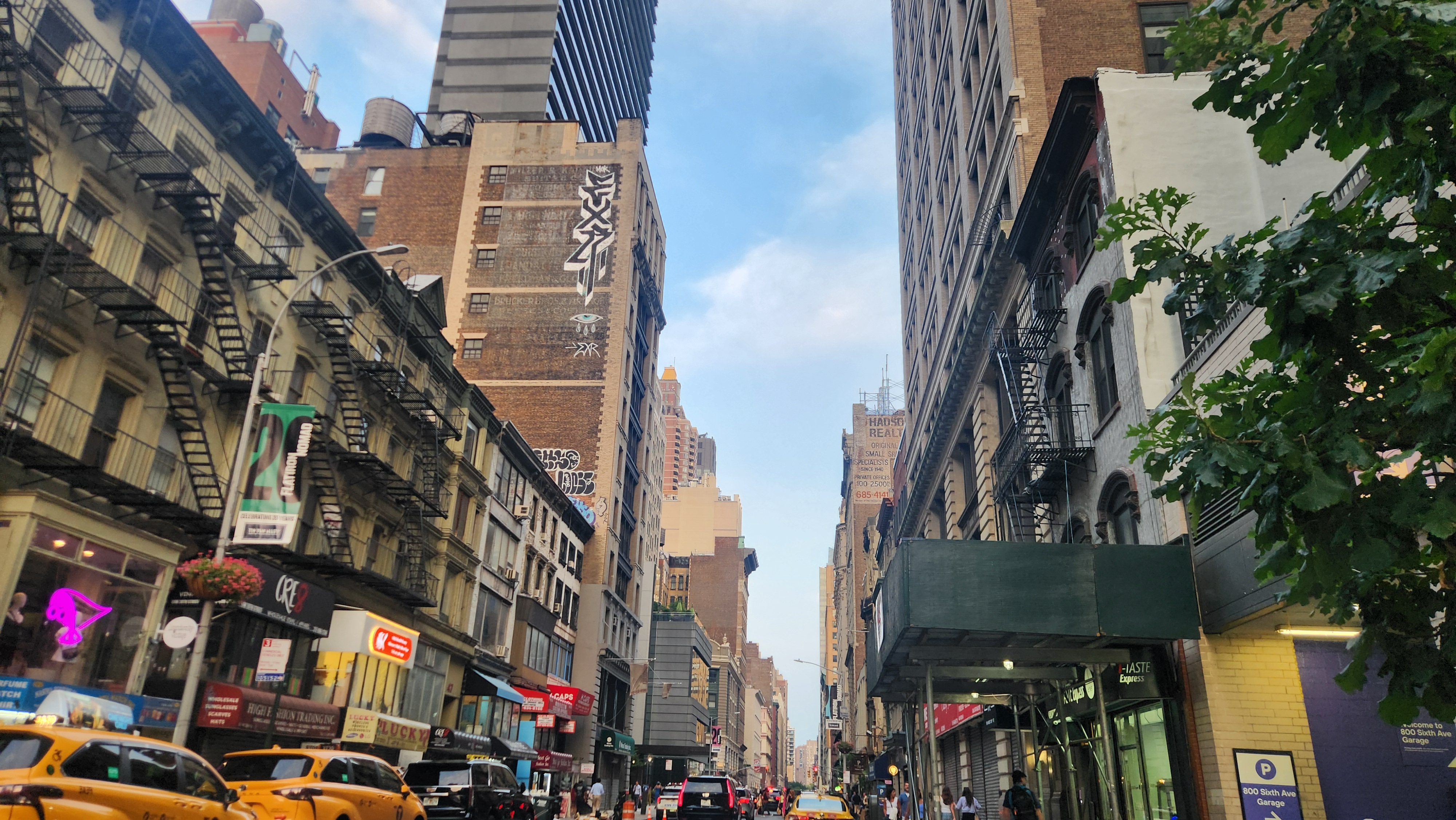
In New York, everyone knew where to shop. You went to Book Row for books, the Diamond District for jewelry, and the Garment District for fashion. But there was also a place to shop for music.
For a few remarkable decades, this unassuming block on West 28th Street between Fifth Avenue and Broadway was the heartbeat of the American music industry. Known as Tin Pan Alley, it became the center of popular music publishing in the late 19th and early 20th centuries, where countless songs that would become part of the Great American Songbook were written, published, and promoted.
Tin Pan Alley emerged around 1885, when music publishers clustered their offices on this single block. Songwriters, lyricists, performers, and publishers all gathered here, making it the place to discover the latest musical trends. If you wanted the next hit song, this was where you came.


The Name “Tin Pan Alley”
The colorful nickname was reportedly coined by a newspaper journalist who compared the deafening racket of dozens of upright pianos—each playing a different tune through open office windows—to the clanging of people banging on tin pans. What began as a joke soon became the accepted name for both this block and, eventually, the American popular music industry itself.
Pitching the Next Hit
Music publishers were constantly searching for songs with commercial potential. Aspiring songwriters would walk into publishing offices, sit down at an upright piano, and perform their latest compositions, hoping to impress publishers and visiting vaudeville stars.
If a song showed promise, the publisher might buy it outright for a flat fee. Unknown composers often surrendered not only the rights to their music but sometimes even the songwriting credit. More established writers, however, could negotiate royalties or co-writing arrangements. Successful composers frequently became salaried staff writers, and some—including Irving Berlin—eventually founded their own publishing companies.
Song Pluggers
Long before streaming services, radio, or even records became the primary way people discovered music, publishers relied on song pluggers to turn songs into hits.
These talented pianists and singers performed new songs all day long in music stores, department stores, theaters, and anywhere large crowds gathered, encouraging customers to buy the sheet music and performers to add the songs to their acts.
Many future legends got their start as song pluggers, including George Gershwin, Irving Berlin, Jerome Kern, Harry Warren, and Cole Porter.
The Sound of America
By the 1930s, the center of the music business had begun migrating north toward the famous Brill Building on Broadway. At the same time, talking pictures, phonographs, and nationwide radio broadcasts transformed how Americans listened to music. By the 1950s, rock and roll had ushered in an entirely new era, bringing the age of Tin Pan Alley to a close.
Today, this block is still noisy—but with traffic, construction, and the bustle of Midtown rather than the competing melodies of dozens of upright pianos pouring from open windows.
It’s a shame. I would have loved to stand here and hear the joyful chaos that gave birth to the Great American Songbook.
Leave a Reply